
Audiometric testing is a mandatory workplace health and safety requirement for any worker who is required by their employer (PCBU) to use hearing protection to protect against the risk of hearing loss associated with noise that exceeds the exposure standard. QSG delivers a professional workplace audiometric screening assessment, compliant with current legislation and standards, to determine hearing threshold levels and identify any subsequent changes through periodic monitoring. Testing is conducted at our Townsville office in an acoustic booth or with calibrated mobile equipment at your workplace or project site.
Businesses across construction, mining, manufacturing and industrial sectors where workers are regularly exposed to noise levels that exceed the statutory exposure standard and are required to use hearing protection as a control measure.
QSG manages the full audiometric testing cycle, from baseline assessments through to periodic routine monitoring, ensuring your program remains compliant with legislative timeframes and testing is conducted to the required standard. Each assessment includes individual screening results provided to the employer where the employee has given written consent.
Our Townsville office maintains a permanent, high-attenuation acoustic booth within a dedicated room to ensure maximum test accuracy and compliance with ambient noise level requirements.
Testing is conducted at your facility or project site using mobile audiometric equipment. We verify the acoustic suitability of your allocated room using sound-level monitoring to confirm compliance with AS/NZS 1269.4:2014 ambient noise requirements.
A formal audiometric screening assessment report is produced for each worker tested, including hearing threshold data across all tested frequencies and a plain-language explanation of the results.
Scheduled routine monitoring audiometry is conducted to identify any deviation from the reference audiogram. Assessments are timed to align with legislative requirements and scheduled at an appropriate point in the work shift.
An initial reference audiogram is established for each worker, capturing hearing threshold levels across all required frequencies. This baseline serves as the reference point for all future routine monitoring assessments.
We assist employers with meeting their obligation to provide baseline audiometric testing within three months of a worker commencing in a noise-exposed role, and periodic monitoring at least every two years thereafter.
Periodic audiometric testing assists in the early identification of changes in a worker’s hearing thresholds. Detected shifts allow the employer to review noise controls and hearing protection arrangements before further deterioration occurs.
A documented audiometric program establishes a clear record of each worker’s hearing threshold history. This supports the PCBU’s record-keeping obligations and provides evidence of a functioning noise management program.
QSG retains records of all baseline and routine monitoring results to support trend analysis and ensure no worker falls outside the required testing intervals. Automated reminders are issued ahead of upcoming monitoring due dates.
All testing, data capture and reporting are conducted to the requirements of AS/NZS 1269.4:2014 and current WHS legislation, keeping your program accurately documented and audit-ready.
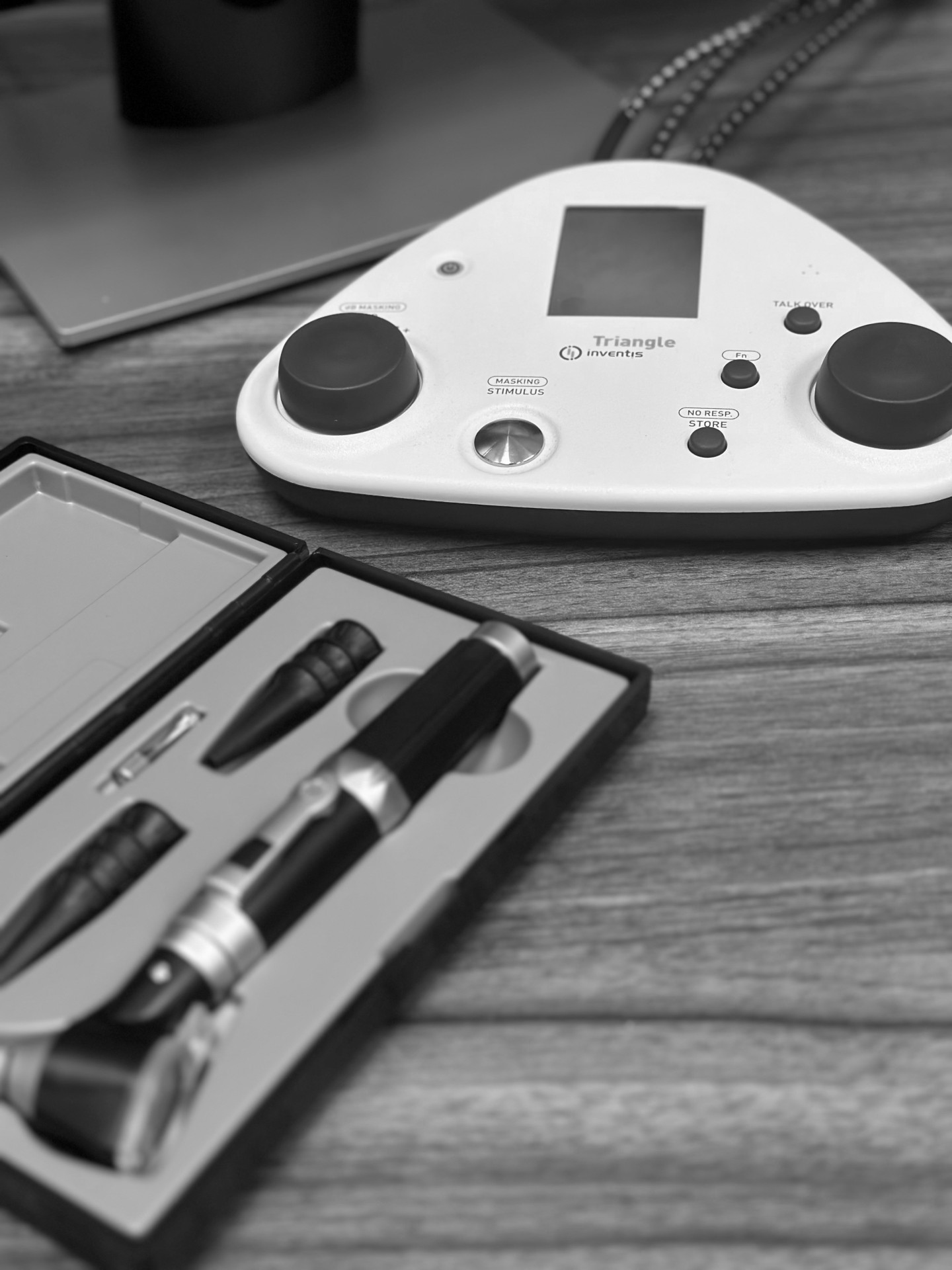
Each worker is assessed individually using calibrated pure-tone audiometric equipment within a compliant acoustic environment. Before testing begins, each worker completes a hearing and noise-exposure history questionnaire and undergoes an otoscopic examination (visual inspection of the ear canal). A formal audiometric screening assessment report is produced for each worker tested, including hearing threshold data across all tested frequencies and a plain-language explanation of the results.
Where the worker has provided written consent, a summary report is issued to the employer following the session. QSG retains records of all assessments to support program continuity and ensure periodic monitoring remains on schedule.
QSG manages your full testing cycle, tracking which workers are due for baseline or routine monitoring and ensuring assessments are scheduled within the required legislative timeframes.
Records of all baseline and routine monitoring assessments are retained by QSG to support program continuity and provide an accurate longitudinal record of each worker’s hearing threshold history.
A formal audiometric screening assessment report is produced for each worker tested, including hearing threshold data across all tested frequencies and a plain-language explanation of the results.
Where the employee has provided written consent, a summary report is issued to the employer following the session to support their WHS record-keeping obligations.
QSG tracks testing intervals and issues reminders ahead of upcoming routine monitoring due dates to prevent workers exceeding the required monitoring period.
Where audiometric results indicate a need to review noise controls or hearing protection arrangements, our consultants are available to provide guidance and support across your broader noise management program.
